The Moment the Illusion Shattered
One mid-morning yoga class in a sun-drenched Portland studio, I caught a student’s eyes fixed on my yellowing big toenail during a demonstration of Tree Pose. It was one of those moments where the serene, zen-like atmosphere of the room suddenly felt very heavy. There I was, guiding twenty people through a sequence designed for health and vitality, while my own right foot looked like it was losing a battle with something decidedly un-zen. That single moment shattered my illusion of being the 'healthy' teacher. I’d always assumed that because I taught barefoot and kept my mat pristine, my feet were the healthiest part of my body. Clearly, I was wrong.
I’ve spent the better part of my thirties cultivating a certain image: the barefoot instructor who is in tune with every muscle and tendon. But nail fungus? That’s something I thought happened to people who didn’t pay attention. The irony of a yoga teacher with visible nail issues is not lost on me, and honestly, it’s humbling. For months, I tried to hide it. I’d find myself practicing the awkwardness of trying to tuck my right big toe under my left foot during Savasana so the students in the front row wouldn’t see it. It was exhausting and, frankly, a little ridiculous.
The Re-Infection Cycle I Didn't See Coming
Early last November, I started noticing that despite my best efforts, the discoloration was spreading. I was scrubbing my yoga mat daily, but I was ignoring a massive piece of the puzzle: my home pedicure tools. I realized that I was likely re-infecting myself every single time I used my un-sanitized metal nippers and files. I would trim the affected nail, then move to the healthy ones, unknowingly dragging fungal spores across my skin like I was planting a garden I never wanted.
I’m not a doctor or a dermatologist—I have zero medical training. I’m just a yoga teacher who got humbled by a toenail and decided to get serious about foot care. What I’ve learned through this process is that 'clean' is not the same as 'sterile.' I had been washing my nippers with basic hand soap and calling it a day. But fungal spores are resilient. They can remain dormant and infectious on stainless steel surfaces for several weeks if not properly disinfected. By early January, after three months of applying tea tree oil from the health food store with zero results, I realized my 'natural' approach was missing a critical step: real, hospital-grade sanitization.
If you're curious about why my initial efforts didn't pan out, I actually wrote about why tea tree oil failed my toenails and what I had to change in my mindset to actually see progress. It wasn't just about the oil; it was about the entire hygiene ecosystem I was neglecting.
Why Boiling Isn't Always the Answer
When I first started researching how to clean my tools properly, the most common advice was to boil them. It sounds logical—heat kills everything, right? The boiling point of water at sea level is 212 degrees Fahrenheit, which is certainly enough to handle most microbes. However, I noticed something after the first few times I tried it. My high-quality, professional-grade nippers started to feel... off. The precision edges didn't meet quite right anymore.
Here is what I wish someone had told me: high-heat exposure can actually warp metal precision edges. When those edges warp even a fraction of a millimeter, they no longer cut cleanly. Instead of a sharp snip, you get a pull. This increases the risk of jagged skin tears and micro-traumas around the nail bed, which is exactly where you don't want openings when you're dealing with a fungus. If you're investing in good stainless steel tools, boiling them might actually be doing more harm than good in the long run.
The 70% Isopropyl Alcohol Rule
After moving beyond the boiling method, I looked into what professional salons actually do. The gold standard for non-porous tools at home is 70% isopropyl alcohol. Now, you might think that 99% alcohol would be better because it's 'stronger,' but that’s a common misconception. I learned that 70% isopropyl alcohol is actually more effective at killing microbes than 99% because the water content (the other 30%) slows down evaporation. This allows the alcohol to stay in contact with the surface longer and actually penetrate the cell walls of the fungus or bacteria.
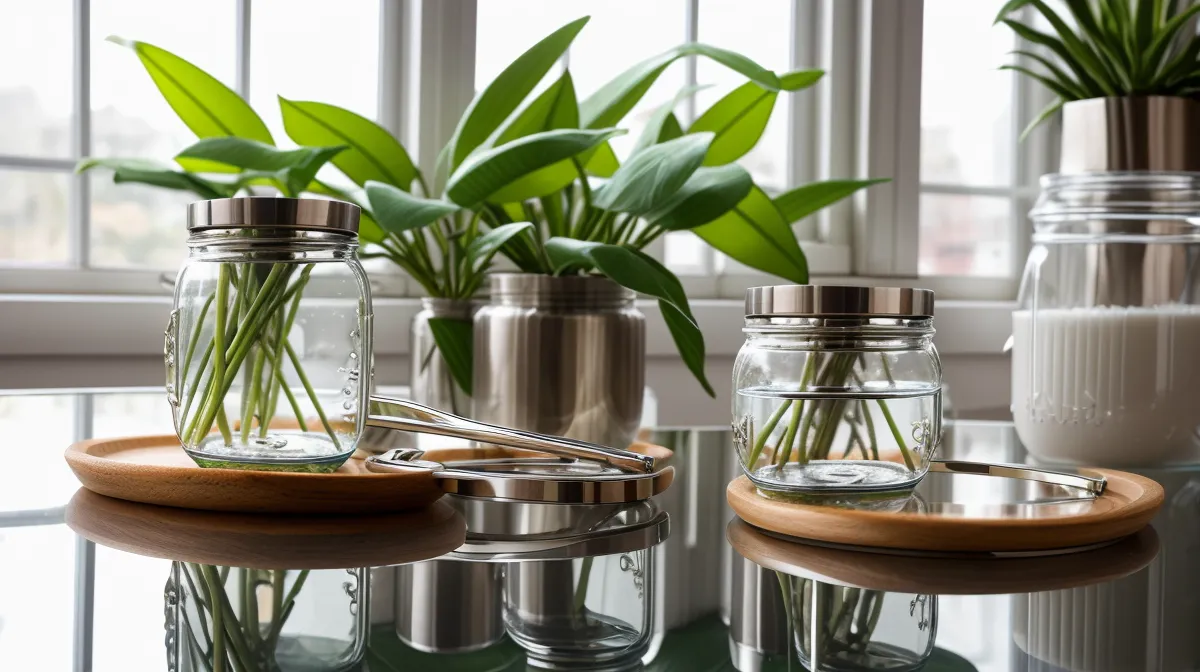
Nowadays, my morning ritual includes a specific sanitization protocol. I’ve traded my tea tree oil obsession for a more disciplined approach to my implements. I keep a small, dedicated glass jar specifically for my metal tools. I fill it with enough 70% alcohol to completely submerge the 'business ends' of my nippers and pushers. I’ve become very familiar with the sharp, sterile sting of 70% alcohol fumes hitting the back of my throat while I organize my steel tools in that glass jar. It’s a scent that now represents progress to me, rather than just a hospital smell.
Step-by-Step Sanitization for Your Tools
- Step 1: Mechanical Cleaning. Before you soak, you must remove any visible debris. Use a small brush (an old toothbrush works great) and some dish soap to scrub the hinges and edges of your nippers. Alcohol cannot disinfect through a layer of dead skin or nail dust.
- Step 2: The 10-Minute Soak. Submerge your tools in 70% isopropyl alcohol. According to EPA standards for hospital-grade disinfection, you need a 10-minute contact time to ensure true fungicidal activity. I usually set a timer on my phone while I’m doing my own morning meditation or stretches.
- Step 3: Air Dry. Once the ten minutes are up, remove the tools with clean hands and place them on a fresh paper towel to air dry. Do not wipe them with a communal hand towel—that’s just asking for a transfer of new bacteria.
- Step 4: Proper Storage. Never store your tools in a sealed plastic bag while they are still damp. This creates a humid micro-climate that fungus loves. Once they are bone dry, I keep mine in a clean, breathable pouch.
The Importance of Non-Porous Materials
One thing I had to learn the hard way is that you can’t sanitize everything. Those cheap, colorful emery boards? They are porous. You cannot soak them in alcohol without them falling apart, and you certainly can’t get the fungus out of the grit. I had to throw all of mine away. It felt wasteful, but it was necessary to break the cycle of re-infection.
I switched entirely to glass (crystal) nail files and stainless steel implements. These materials are non-porous, meaning they don't have the tiny 'hiding spots' that wooden or foam tools have. It’s a bit like choosing a high-quality closed-cell yoga mat over a cheap open-cell one; the cheap ones just soak up sweat and bacteria, while the good ones stay on the surface where you can actually clean them. If you’re serious about your foot health, talk to your own podiatrist about the types of files they recommend, but for me, switching to glass was a game-changer.
Patience and the Bi-Weekly Log
By mid-April, I started seeing the fruits of this disciplined labor. My bi-weekly progress photos—which I take religiously every second Sunday—finally showed a sliver of clear, pink nail emerging from the base. It’s a slow process. Nail health requires the same kind of patience as holding a long, uncomfortable Yin pose. You can't rush the growth; you can only provide the cleanest possible environment for it to happen.
I've found that keeping a simple log on my phone has helped me stay consistent. I track what I apply, how often I sanitize, and I look back at those photos when I feel like giving up. If you're struggling to see if your own routine is working, I highly recommend learning how to track your toenail healing with bi-weekly progress photos. It’s the only way to stay objective when you’re staring at your feet every single day.
Final Thoughts from the Mat
Teaching yoga barefoot used to make me feel vulnerable in a bad way once the fungus started. But now, it feels like a different kind of practice. I’m more aware of my feet than ever, not because I’m trying to hide them, but because I’m taking care of them with the same intentionality I bring to my Vinyasa flows. Sanitizing your tools properly isn't just about 'cleaning'; it's about respecting your body and the tools you use to care for it.
If you're in the same boat, don't be discouraged. It’s a journey. Just remember: 70% alcohol, 10 minutes, and no more boiling those expensive nippers. Your feet (and your students) will thank you for the extra care. And of course, if you see things getting worse or if you're in pain, please see a professional. I'm just a teacher sharing my notes from the studio floor, and everyone's body reacts differently.